
10 Reasons Bridge Engineers Trust MIDAS Civil
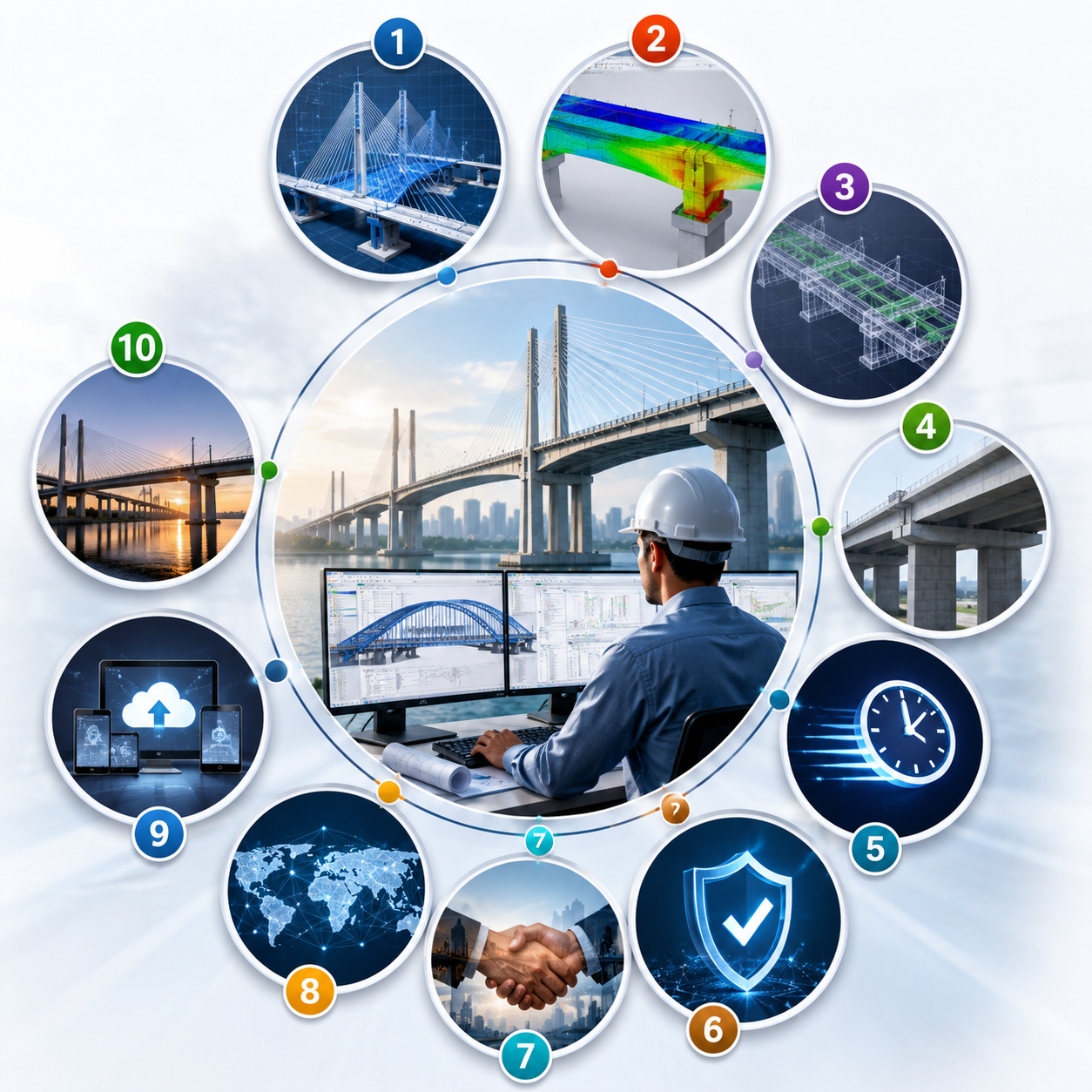
Designing a bridge is far more than connecting two points. Every bridge must safely withstand traffic, wind, earthquakes, changing temperatures, and years of continuous use. Behind every successful bridge is careful engineering, detailed analysis, and software capable of handling these complex challenges. That's why bridge engineers around the world rely on *MIDAS Civil*. Unlike general structural analysis software, MIDAS Civil was developed specifically for bridge engineering. It provides the tools needed to analyze, design, and optimize bridges of all sizes, helping engineers make informed decisions from concept to construction. Here are ten reasons why MIDAS Civil has become one of the most trusted bridge engineering solutions in the industry.
Built Specifically for Bridge Engineering
Many structural analysis programs can model bridges, but MIDAS Civil was designed with bridge engineers in mind from the very beginning.
Whether you're working on a simple highway overpass or a complex cable-stayed bridge, the software includes dedicated tools that make modeling and analysis more intuitive. Instead of adapting a general-purpose program to fit bridge projects, engineers can work within an environment created specifically for their needs.
Supports a Wide Range of Bridge Types
Every bridge project is different.
Some involve reinforced concrete girders, while others use prestressed concrete, steel, composite sections, cable-stayed systems, or suspension designs.
MIDAS Civil supports a wide variety of bridge types, allowing engineers to work on different projects without switching between multiple software applications. This flexibility makes it a valuable solution for consultants and infrastructure firms handling diverse bridge portfolios.
Time-Dependent Material Behaviour
Concrete changes over time.
Factors such as creep, shrinkage, and prestress losses can significantly influence the long-term performance of a bridge.
MIDAS Civil incorporates these time-dependent effects into its analysis, giving engineers a more realistic understanding of how a structure will behave not just today, but years into its service life.
This level of analysis supports better design decisions and contributes to more durable infrastructure.
Designed for Modern Design Codes
Bridge engineers often work under strict design standards and government regulations.
MIDAS Civil supports numerous international design codes, helping engineers perform analysis and design in accordance with recognized engineering practices.
This reduces the time spent on manual verification and gives designers greater confidence that their calculations meet project requirements.
Efficient Modelling Saves Valuable Time
Creating detailed bridge models manually can be time-consuming.
MIDAS Civil includes intelligent modelling tools and practical workflows that simplify the process of building even complex bridge geometries. Engineers can spend less time creating models and more time evaluating design alternatives and improving project quality.
On projects with demanding schedules, these time savings can make a significant difference.
Clear Visualisation Improves Design Decisions
Understanding analysis results is just as important as generating them.
MIDAS Civil provides graphical representations of structural behaviour, making it easier to interpret stresses, deflections, load paths, and overall bridge performance.
These visual outputs help engineers identify potential issues quickly while also making it easier to explain design concepts during client presentations or technical reviews.
Comprehensive Reports and Documentation
Engineering projects require more than accurate calculations—they also require clear documentation.
MIDAS Civil helps generate organized reports that support design reviews, approvals, and project records. Instead of manually compiling calculations from multiple sources, engineers can present results in a professional and consistent format.
This not only improves efficiency but also simplifies communication with clients, reviewers, and project stakeholders.
Trusted by Bridge Engineers Worldwide
Perhaps the strongest reason engineers choose MIDAS Civil is its proven track record.
The software has been used on bridge projects across the world, from highway infrastructure and railway bridges to complex cable-supported structures. Its reputation has been built through years of successful project delivery and continuous development based on real engineering requirements.
For many bridge consultants, MIDAS Civil has become an essential part of their design workflow.
Why the Right Software Makes a Difference
Bridge engineering is becoming increasingly demanding.
Longer spans, tighter budgets, stricter regulations, and accelerated project schedules require engineers to work smarter than ever before. Choosing software designed specifically for bridge engineering allows teams to analyse structures more accurately, evaluate alternatives more efficiently, and deliver projects with greater confidence.
Rather than spending valuable time overcoming software limitations, engineers can focus on what matters most—creating safe, durable, and efficient infrastructure.
Final Thoughts
No software replaces engineering judgement, but the right software makes better engineering decisions possible.
MIDAS Civil combines advanced analysis capabilities with bridge-specific workflows, helping engineers tackle everything from routine highway bridges to some of the world's most challenging infrastructure projects. Its ability to model complex structures, simulate real-world behaviour, and generate reliable results has earned the trust of bridge professionals across the globe.
At *Aileron*, we help bridge consultants, infrastructure firms, government departments, and educational institutions implement industry-leading engineering software, including MIDAS Civil. From software licensing and deployment to training and technical support, our team works closely with engineers to ensure they have the tools needed to deliver successful projects.
MIDAS Civil is a structural analysis and design software developed specifically for bridge engineering and civil infrastructure projects.
Yes. It supports reinforced concrete, prestressed concrete, steel, composite, cable-stayed, suspension, and many other bridge configurations.
Absolutely. Its advanced analysis capabilities and bridge-focused workflows make it a popular choice for engineering consultants working on transportation and infrastructure projects.
Yes. Engineers can simulate different stages of construction to understand how the bridge behaves throughout the building process, leading to more accurate and reliable designs.